
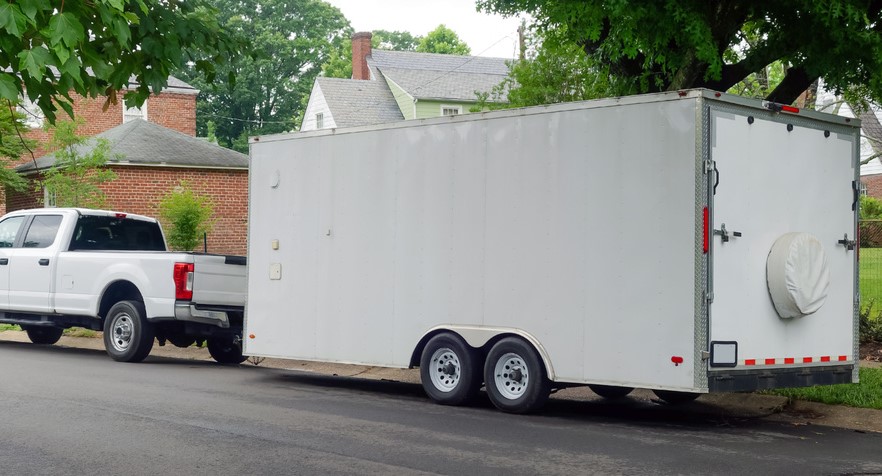
Just like cars and trucks, trailers must follow parking rules when in use, being moved, or stored. The difference is that trailers are often larger, harder to fit in standard parking spaces, and more likely to create visibility or access issues when parked in the wrong spot.
So, can you park a trailer on the street? The answer depends on where you live, how long the trailer will be parked, and whether it is attached to a vehicle.
Where Not to Park a Trailer
In most cities and subdivisions, there are limits on where you can park a utility trailer, dump trailer, enclosed trailer, equipment trailer, or recreational trailer. These rules are designed to keep roads clear, protect pedestrians, and prevent trailers from blocking driveways, sidewalks, and emergency access.
While exact rules vary by location, the following guidelines are a good starting point when deciding where not to park a trailer.
Do Not Park a Trailer in These Places
You should avoid parking your trailer:
- On a public street, alley, city parking lot, or public right-of-way for longer than local rules allow
- In front of your house, if local laws or HOA rules prohibit trailer parking there
- In your front yard or on grass, if local zoning requires trailers to be parked on an improved surface
- On private property without permission from the property owner
- In a place that blocks a neighbor’s driveway
- On a sidewalk or crosswalk
- Too close to an intersection, stop sign, traffic signal, or fire hydrant
- In a way that blocks traffic, limits visibility, or creates a safety hazard
- In a business parking lot, unless trailer parking is clearly allowed
- Anywhere signs say stopping, standing, or parking is not allowed
In Illinois, general parking laws also prohibit vehicles from being parked in several unsafe locations, including sidewalks, intersections, crosswalks, in front of public or private driveways, within 15 feet of a fire hydrant, within 20 feet of a crosswalk at an intersection, within 30 feet of certain traffic signals or stop signs, and within 50 feet of a railroad crossing unless loading or unloading rules apply.
Even if your trailer is only parked for a short time, make sure it is not blocking pedestrians, drivers, emergency vehicles, or neighboring properties.
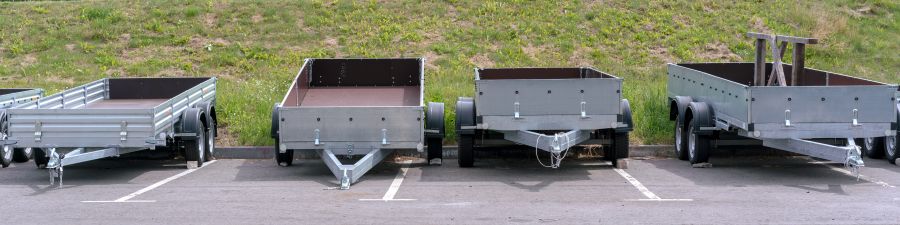
Can You Park an Unattached Trailer on the Street?
Many cities treat unattached trailers differently from trailers connected to a tow vehicle. An unattached trailer sitting on a public street may be considered stored property instead of a temporarily parked vehicle.
Because of this, some areas do not allow unattached trailers to be stored on public streets or alleys. Other areas may allow short-term trailer parking for loading, unloading, or jobsite use, but only for a limited amount of time.
If you need to park a trailer on the street, check local rules first. When possible, keep the trailer attached to the towing vehicle, follow all posted signs, and move it as soon as loading, unloading, or the job is complete.
Can You Park a Trailer in Your Driveway?
A driveway is often a better choice than street parking, but that does not mean every driveway is automatically allowed. City zoning rules, county rules, subdivision restrictions, and HOA guidelines may still apply.
In general, a trailer parked in a driveway should not block the sidewalk, extend into the street, create a visibility problem, or interfere with neighboring properties. Some local rules may also require trailers to be parked on an improved surface instead of grass, gravel, or an unimproved part of the yard.
Before parking a trailer in your driveway long-term, check for rules about:
- How long can a trailer stay parked
- Whether the trailer can be attached or unattached
- Whether the trailer can be visible from the street
- Whether it must be stored behind the home, garage, or fence
- Whether the trailer must be on a paved or improved parking surface
- Whether your HOA allows trailers in driveways
- Whether the trailer blocks sidewalks, roads, or public access
For example, Mt. Vernon’s zoning code includes utility trailers, travel trailers, boat trailers, recreational vehicles, and similar equipment under major recreational equipment. The code says this type of equipment generally must be stored in an improved driveway or parking space, a carport, an enclosed building, or behind the nearest portion of a building so it is not visible from the street unless property conditions make that unreasonable. It also allows temporary parking on residential premises for loading or unloading for up to 24 hours.
Because rules can change, always confirm the current ordinance in your city before storing a trailer at home.
Where You CAN Park a Trailer
The best place to park a trailer depends on local laws, your property layout, trailer size, and how long you need to leave it parked. In many cases, you may be able to park a trailer in one of the following places if local rules allow it:
- Along the side of your home or behind your home
- In a garage, shop, barn, or enclosed building on your property
- In your driveway, as long as it does not violate city, county, or HOA rules
- In a self-storage facility that allows trailer storage
- In a private lot where trailer parking is permitted
- On a jobsite with permission from the property owner
- On the street for short-term loading or unloading if local laws allow it
If you plan to leave a trailer somewhere for more than a day, it is worth double-checking the rules. Many cities have stricter limits for long-term parking, public street parking, and unattached trailers.
Best Places to Store a Trailer Long Term
Long-term trailer storage is different from short-term parking. If you do not use your trailer every day, storing it in a secure and approved location can help you avoid tickets, towing, neighborhood complaints, and unnecessary wear.
Good long-term trailer storage options include:
- A garage or enclosed building
- A covered storage facility
- A fenced private lot with permission
- A self-storage facility that accepts trailers
- A driveway or approved parking space
- A shop, barn, or business property where trailer storage is allowed
A storage facility or private lot may be the better choice if your trailer is too large for your driveway, your HOA does not allow trailers, you only use the trailer seasonally, or you carry valuable tools and equipment.
Contractors, landscapers, farmers, and haulers may also benefit from secure storage because it keeps trailers and equipment protected when they are not in use.
Tips When Storing Your Trailer
Parking your trailer in the right place is only part of proper storage. If your trailer will sit unused for several weeks or months, take time to protect it from weather, rust, tire damage, and theft.
Remove or Maintain Breakaway Batteries
If your trailer has a braking system that uses a breakaway battery, check the battery before storage. In many cases, batteries should be removed, charged, and stored somewhere dry and temperature-controlled. If left unattended for too long, batteries can lose power or wear out faster.
Take Weight Off the Tires
If your trailer will sit for an extended period, consider using jacks or supports to take some weight off the tires and suspension. This can help prevent flat spots, tire cracking, and unnecessary strain on the trailer. Some owners also remove the tires and store them separately, which can help protect the tires and make the trailer harder to steal.
Grease Moving Parts
Greasing moving parts helps protect your trailer and keeps components working smoothly. Pay attention to wheel bearings, hinges, latches, ramps, couplers, and other parts that may rust or seize when exposed to weather.
Cover the Trailer
If your trailer will be stored outside, a quality cover or tarp can help protect it from rain, snow, sun, and debris. Moisture can lead to rust, wood rot, and electrical issues, so covering the trailer can help extend its life.
Make sure the cover is well-secured so it does not blow loose, trap water, or rub against painted surfaces.
Lock It Up
Trailer theft can happen quickly, especially when a trailer is stored outside. Use a strong hitch lock, coupler lock, wheel lock, or security chain. If you have an enclosed trailer, keep the doors locked. If you have an open trailer, remove tools, straps, equipment, and valuable cargo before storage.
The harder you make your trailer to move or access, the less appealing it becomes to thieves.
Inspect Before You Tow Again
Before using your trailer after storage, do a quick inspection. Check the tire pressure, lights, wiring, brakes, hitch, safety chains, floor, doors, ramps, and registration. Look for rust, cracks, leaks, loose hardware, or rodent damage.
A short inspection can help prevent bigger problems once you are back on the road.
How to Report Illegal Trailer Parking
If a trailer is blocking your driveway, sidewalk, business entrance, alley, or public right-of-way, contact the proper local authority instead of trying to move it yourself. Depending on where you live, this may be parking enforcement, the local police department’s non-emergency line, code enforcement, public works, or the zoning department.
When reporting a trailer parking issue, be ready to provide:
- The trailer’s location
- How long it has been parked there
- Whether it is attached or unattached
- Whether it is blocking a driveway, sidewalk, road, alley, or business entrance
- A description of the trailer
- License plate information, if visible
- Photos, if the city allows them with the report
Trailer Parking FAQs
Can you park a trailer on the street overnight?
It depends on your local rules. Some cities allow short-term street parking, while others limit how long a trailer can sit on a public street or prohibit trailer storage on streets and alleys. Always check your city’s parking ordinances before leaving a trailer on the street overnight.
Can a trailer be parked in a driveway?
In many cases, yes. However, driveway parking may still be subject to city, county, and HOA rules. The trailer may need to be parked on an improved surface, kept out of the sidewalk or street, and placed where it does not block visibility or public access.
How long can a trailer sit on the street?
The allowed time varies by location. Some areas may allow 24 hours, others may allow 48 to 72 hours, and some may not allow public street storage at all. Look up your local parking rules or contact city officials to confirm.
Can an HOA stop me from parking a trailer at home?
Yes. An HOA may have its own rules about trailer parking, even if your city allows it. HOA guidelines may limit where a trailer can be parked, how long it can stay there, and whether it can be visible from the street.
Should You Park a Trailer on the Street?
Parking and storing your trailer is not always as simple as finding an open space. In many areas, trailers cannot be left on the street long-term, and some cities restrict unattached trailers, front-yard parking, or trailers stored in public rights-of-way.
To stay safe and avoid violations, check local rules, be mindful of neighbors, avoid blocking traffic or sidewalks, and choose a secure storage option when your trailer is not in use. If you are not sure, avoid leaving your trailer on the street for more than a short loading or unloading period.
At Country Blacksmith Trailers, we are a premier trailer dealer in Illinois. We offer new and used trailers for sale from top brands like Aluma, Diamond C, Homesteader, Top Hat, and more. We also have a variety of pickup flatbeds from Bradford Built, Cadet, and CM Truck Beds, plus trailers for rent in Illinois and a rent-to-own program.
Need a trailer that fits your property, job, or storage space? Browse our inventory online or contact Country Blacksmith Trailers today for help finding the right trailer.
Let’s Find Your Perfect Trailer
No matter what you’re hauling or where you’re headed, Country Blacksmith Trailers has the perfect trailer to get the job done. We proudly carry a huge selection of high-quality trailers from trusted manufacturers, all backed by expert service and support you can count on. Whether you need a trailer or truck service body, you’ll find durable, dependable options at competitive prices right here in Illinois.
