A standard trailer may handle everyday hauling, but some jobs require a more specialized setup. Your equipment may need specific tie-down locations, your business may need a mobile workspace, or your vehicles may require dimensions that are difficult to find in a standard model.
That is where a custom trailer can make a difference.
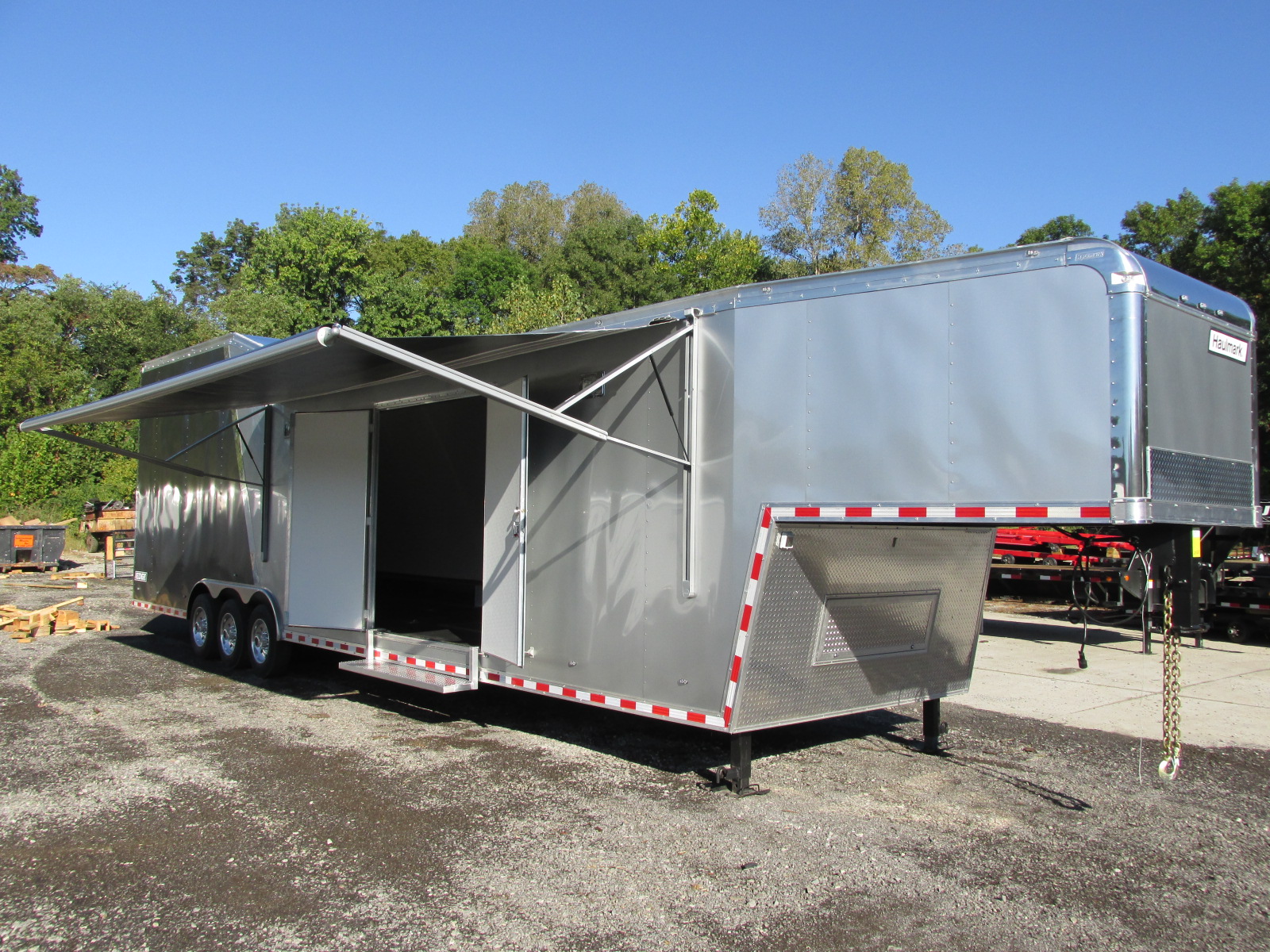
Custom trailers can be ordered with carefully selected features or modified to improve storage, loading, organization and everyday usability. If an available model cannot meet your requirements, we may also be able to build a trailer in our weld shop.
The right approach depends on what you plan to haul, how frequently you will use your trailer and which features will make the work easier.
What Is a Custom Trailer?
A custom trailer is designed, ordered or modified around a specific use instead of relying only on a standard factory configuration. Customization can be as simple as adding tie-downs and interior lighting or as extensive as developing a specialized trailer for equipment, business or recreational use.
We can add options such as:
- Cabinets
- Awnings
- Tie-down points
- E-track
- Floor liners
- Air-conditioning units
- Roof vents
- Interior and exterior lights
- Hydraulic jacks
Additional options may be available depending on the trailer, its construction and its intended use. We can also complete custom fabrication in our weld shop when we cannot order a suitable trailer from one of our manufacturers.
Explore examples in our custom trailer gallery.
When Does a Custom Trailer Make Sense?
Customization is valuable when a standard trailer creates compromises that could make loading, storage or daily operation less efficient.
A custom trailer may be a good choice if:
- Your equipment has unusual dimensions or loading requirements.
- You regularly carry tools that need dedicated storage.
- Your cargo requires specific securement points.
- You need power, ventilation or climate control.
- The trailer will function as a workspace or mobile business.
- You want room to accommodate future equipment.
- A standard model does not offer the necessary deck, door or axle configuration.
Planning these details before buying can help you avoid purchasing a trailer that requires extensive modifications later.
Popular Types of Custom Trailers
The best starting point depends on what you need to transport or accomplish. These are some of the most common uses for custom trailer designs and modifications.
Contractor and Mobile Workshop Trailers
Contractors frequently need more than an empty cargo box. A well-planned enclosed trailer can provide secure tool storage and a more organized workspace at each jobsite.
Cabinets can create dedicated places for tools, parts and supplies. E-track and tie-downs can help secure larger equipment during transport, while floor liners protect the interior from frequent loading and unloading. Interior lights and roof vents can also make the space more comfortable and functional.
Before choosing a layout, make a list of the equipment you carry on a normal workday. Place frequently used items near an access door and leave enough open floor space for your largest machines or materials.
One of our enclosed cargo trailers may provide the right foundation for your mobile workshop.
Race Car and Motorsport Trailers
Race teams need room for more than the vehicle itself. Tires, tools, fuel containers, replacement parts and safety equipment must also fit without interfering with loading or unloading.
A custom race trailer may include:
- Secure tie-down locations
- Cabinets and work surfaces
- Interior lighting
- An awning for shade at the track
- Floor protection
- Ventilation or air conditioning
- Space for tools and spare parts
Vehicle dimensions are only the beginning. The trailer must also have a suitable door opening, sufficient ramp capacity and enough interior clearance for loading the vehicle.
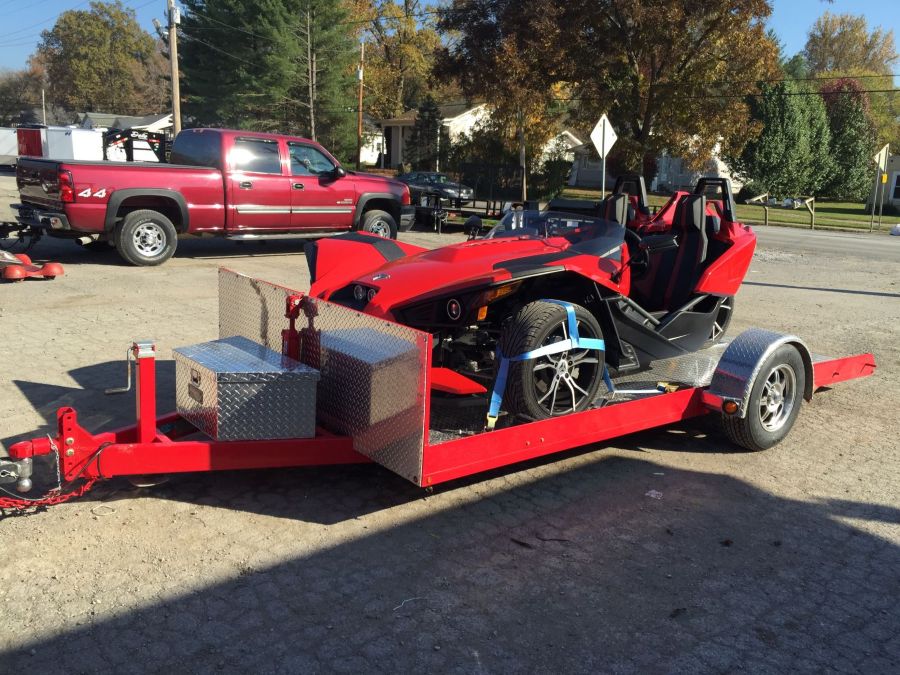
We have completed race trailer projects as well as a custom trailer designed to transport a Polaris Slingshot.
Landscaping and Property Maintenance Trailers
Landscapers often haul mowers, trimmers, blowers, fuel containers and hand tools in the same trailer. Without a planned layout, equipment can become difficult to reach and harder to secure.
Open utility trailers offer convenient access for mowers and landscaping equipment. Enclosed trailers provide additional protection from weather and theft. The right choice depends on your equipment, work environment and storage requirements.
Useful customization options may include tie-downs, E-track, racks, floor protection, lighting and dedicated storage. Door width and ramp angle should also be checked against the largest mower or machine you plan to transport.
Concession and Mobile Business Trailers
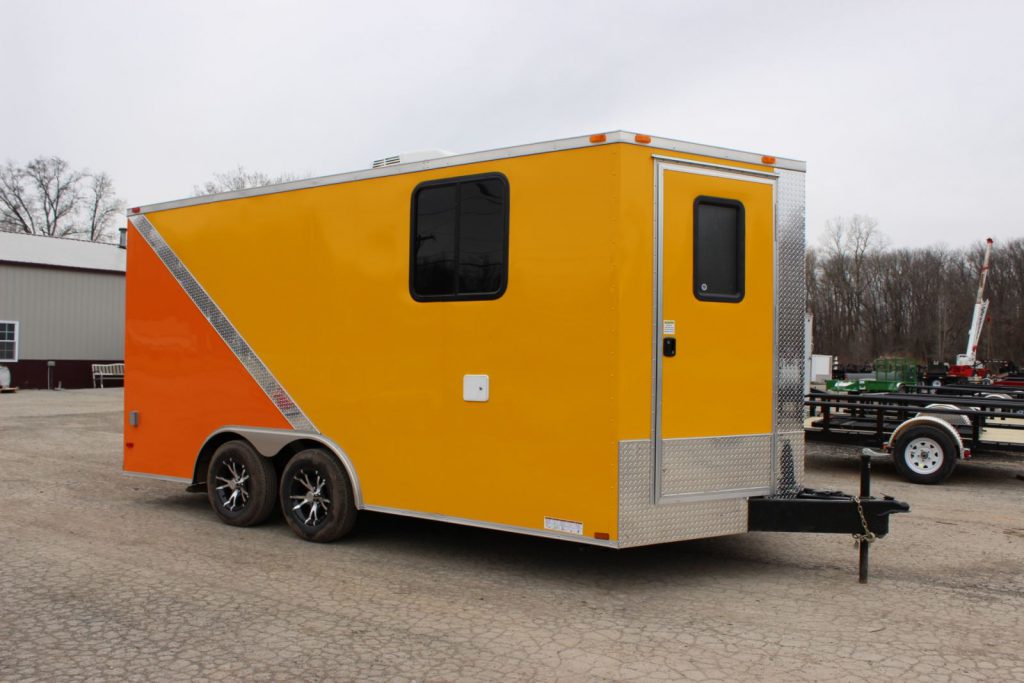
A concession or mobile business trailer requires careful planning because the interior must support both equipment and people. The layout may need space for counters, storage, appliances, service windows and utilities.
Start by identifying:
- The equipment that must operate inside the trailer
- The number of people who will work inside
- Storage requirements
- Electrical needs
- Heating, cooling and ventilation needs
- Customer service areas
- Local health, fire and permitting requirements
Requirements for food preparation and mobile businesses vary by location. Before finalizing a trailer, confirm the applicable rules with the local agencies responsible for licensing, health inspections and fire safety.
An awning, cabinets, lighting, floor liners, roof vents or air conditioning may improve your trailer’s usability, depending on your business.
Recreational and Toy-Hauling Trailers
Motorcycles, ATVs, side-by-sides and other recreational vehicles come in many sizes. A custom layout can make it easier to load your vehicle while still leaving room for helmets, riding gear, tools and camping supplies.
Important measurements include:
- Overall vehicle length, width and height
- Door opening dimensions
- Interior clearance
- Space between wheel wells
- Ramp width and capacity
- Room for tie-downs
- Space needed to move around the vehicle
Do not rely only on the trailer’s advertised exterior size. Measure your equipment and compare those measurements with the trailer’s usable interior space and door opening.
Custom-Ordered Trailer or Custom Fabrication?
Not every project requires a trailer to be built from the ground up. In many cases, the best solution is to start with a manufacturer’s standard model and order it with selected options.
A Custom Order May Be Best When:
- A standard trailer is available in the correct size and weight rating.
- The manufacturer offers the necessary doors, height or axle configuration.
- You primarily need factory options or interior accessories.
- You want a familiar model with several upgrades.
Custom Fabrication May Be Best When:
- Available models do not fit your equipment.
- The trailer requires a highly specialized layout.
- A unique deck or loading configuration is necessary.
- The project requires welding or structural fabrication.
- You need a trailer built for a specific machine or application.
We can help you determine whether it makes more sense to customize an existing trailer, place a special order or discuss a build with our weld shop.
How to Plan Your Custom Trailer
A productive consultation starts with detailed information about how you will use the trailer. Before requesting a quote, consider the following factors.
Measure Everything That Must Fit
Record the length, width, height and approximate weight of your largest equipment. Include attachments that may change its dimensions.
Remember to account for the trailer’s door opening, wheel wells, cabinets and other interior features. Something may fit inside the trailer but still be too wide or tall to pass through its door.
Estimate the Total Loaded Weight
List the weight of the equipment, tools, inventory and supplies you expect to carry. Include permanently installed accessories because they also reduce the trailer’s available payload capacity.
GVWR is the maximum allowable weight of a fully loaded trailer. Payload capacity is generally determined by subtracting the trailer’s empty weight from its GVWR. Your selected trailer and tow vehicle must both be rated for the anticipated load.
Consider Loading and Cargo Securement
Tie-down placement should be determined by your cargo rather than added as an afterthought. E-track and dedicated tie-down points can provide flexibility, but every securement device must be appropriate for the load.
An enclosed trailer does not secure its contents by itself. Equipment and other cargo still require properly rated restraints to prevent movement during transport.
The National Association of Trailer Manufacturers also recommends following the trailer and tow vehicle manufacturers’ instructions for weight distribution and tongue weight. You can review additional safe trailering guidance from NATM.
Match the Trailer to Your Tow Vehicle
Confirm your tow vehicle’s towing capacity, hitch rating and recommended tongue weight before selecting a trailer. Remember that the trailer’s loaded weight matters, not only its empty weight.
A larger trailer may provide useful space, but it can also require a higher-capacity tow vehicle and more room for turning, parking and storage.
Questions to Ask Before Finalizing Your Design
Before approving a custom order or fabrication project, ask:
- What will I carry most often?
- What is my heaviest expected load?
- Which items must remain easily accessible?
- Does the cargo need protection from weather?
- Will I need a ramp or another loading system?
- How many tie-down points will I need?
- Will the trailer require lighting, ventilation or climate control?
- Are cabinets or permanent storage necessary?
- Can my tow vehicle safely handle the completed trailer?
- Are there industry-specific permits or inspections to consider?
Providing photos, equipment measurements and a rough layout can help us evaluate your project and recommend suitable options.
Frequently Asked Questions About Custom Trailers
Can You Customize an Existing Trailer?
Yes. Depending on its design and condition, an existing trailer may be upgraded with cabinets, awnings, tie-downs, E-track, floor liners, lighting, roof vents, air conditioning, hydraulic jacks and other features.
We will need to evaluate the trailer and requested modifications to determine what is possible.
Can You Build a Completely Custom Trailer?
We can build custom trailers in our weld shop when an available manufacturer model cannot meet your needs. The feasibility of the project will depend on its specifications, intended use and weight requirements.
How Long Does It Take to Order or Build a Custom Trailer?
The timeline depends on the trailer, requested options, parts availability, manufacturer schedule and amount of fabrication required. Contact us for a project-specific estimate.
Will Custom Features Affect the Trailer’s Payload Capacity?
Yes. Cabinets, air-conditioning units, flooring and other permanently installed features add weight to the trailer. That additional weight reduces the remaining capacity available for cargo, so it must be considered when selecting your trailer and planning the design.
